
Dr George Konstantinidis Consultant orthopaedic surgeon
Explore the live website ↗A doctor’s website should make the next step clearer
When someone is looking for a specialist, they may be trying to understand what the doctor treats, where they consult, and what to expect at a first appointment. A website should help them find those answers without having to piece them together.
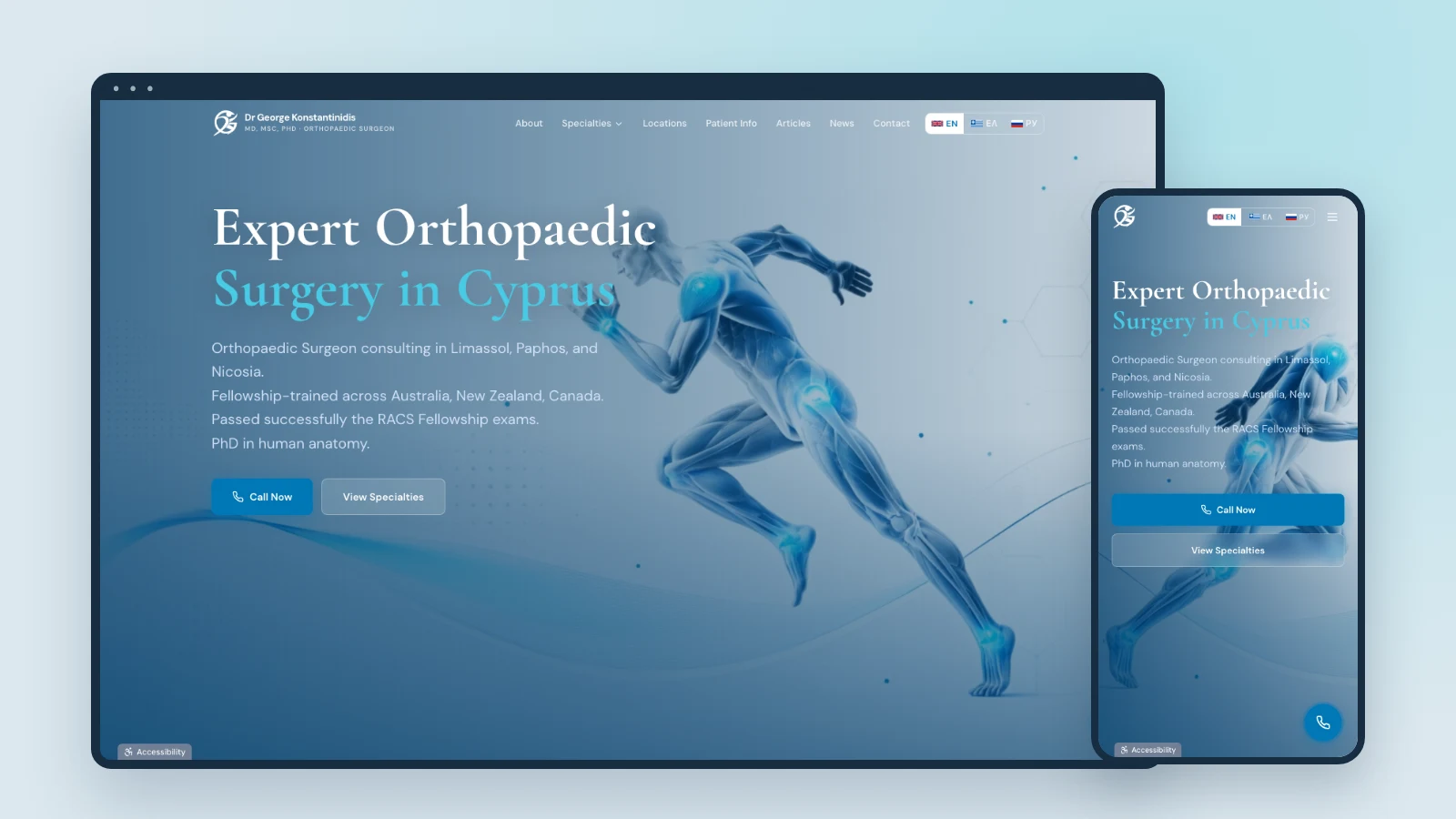
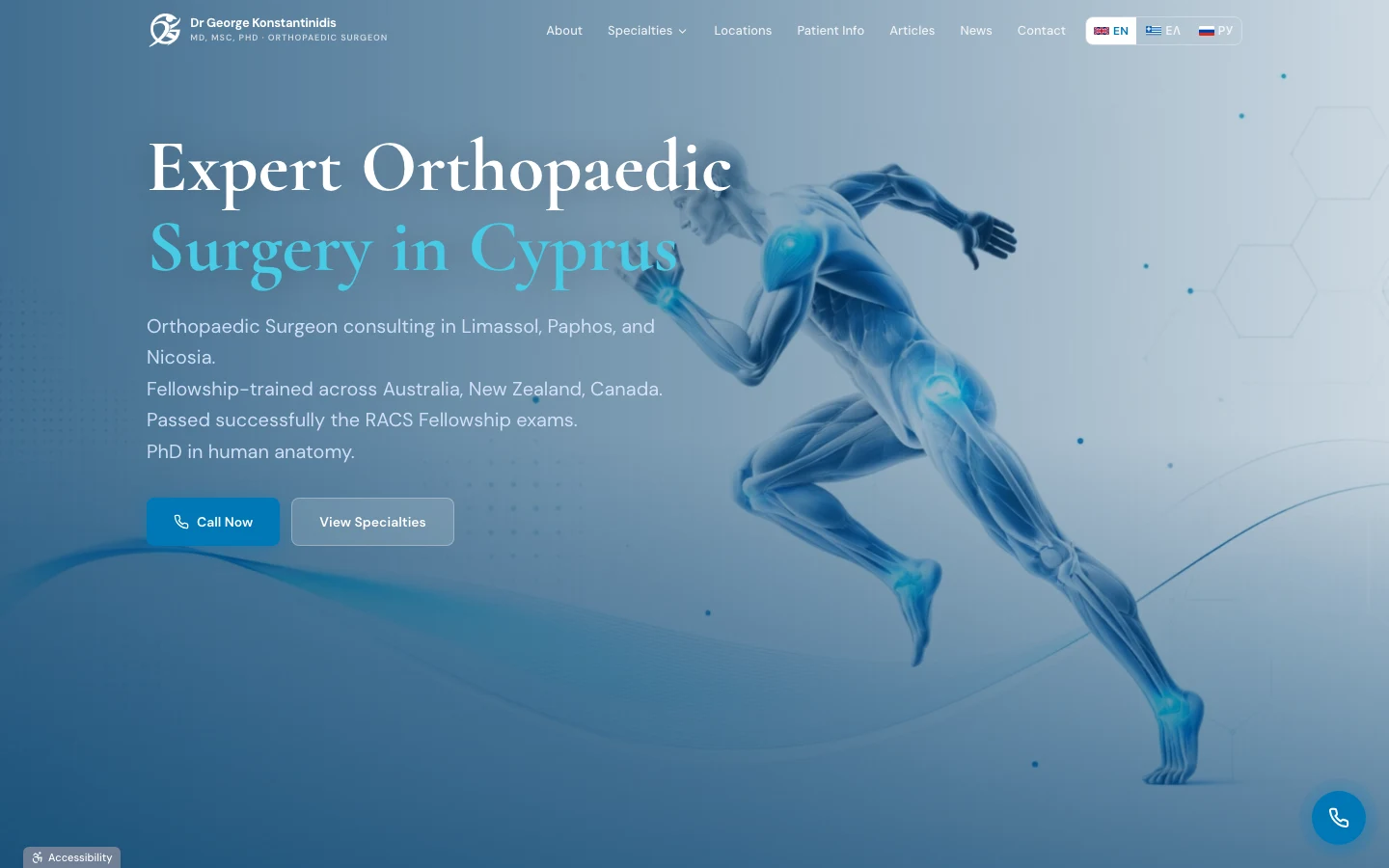
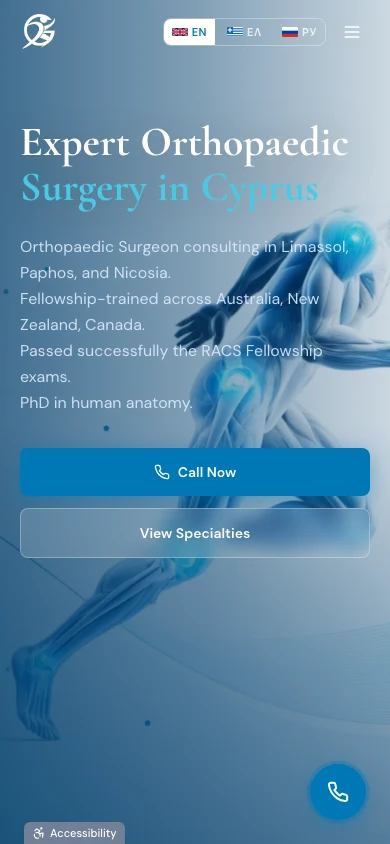
For Dr George Konstantinidis, a consultant orthopaedic surgeon in Cyprus, we designed and developed a website around the information patients are likely to need: his areas of expertise, clinic locations, patient guidance, and ways to get in touch. The site is available in English, Greek, and Russian.
Making a broad range of specialties easier to explore
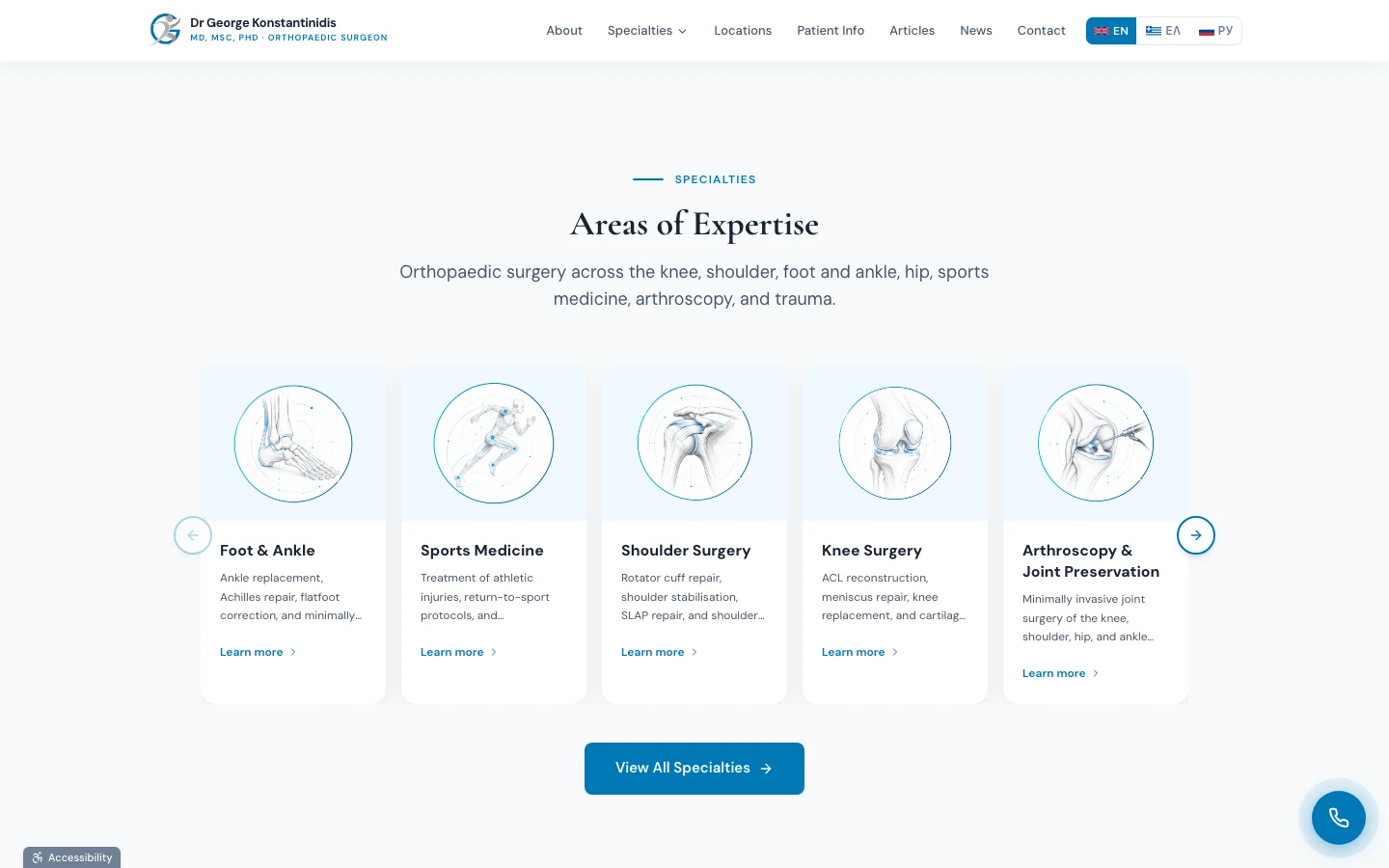
Orthopaedics covers many areas. The site presents Dr Konstantinidis’s specialties separately, including knee, shoulder, hip, foot and ankle, sports medicine, trauma, and paediatric orthopaedics. Visitors can choose the area they want to learn about and continue to a dedicated page.
This structure gives each specialty room for its own explanation. It also helps visitors find relevant information without having to read one long page that covers everything at once. Browse the specialty pages.
Showing experience through useful details
A professional website should give visitors a clear picture of the doctor’s background. Dr Konstantinidis’s biography brings together his education, international fellowship training, academic work, publications, and clinical experience.
The aim is to make relevant credentials easy to find and understand. A biography can support a visitor’s decision by presenting the doctor’s experience in context, rather than relying on a list of titles alone. See how the biography is organized.
Helping patients prepare before they contact the clinic
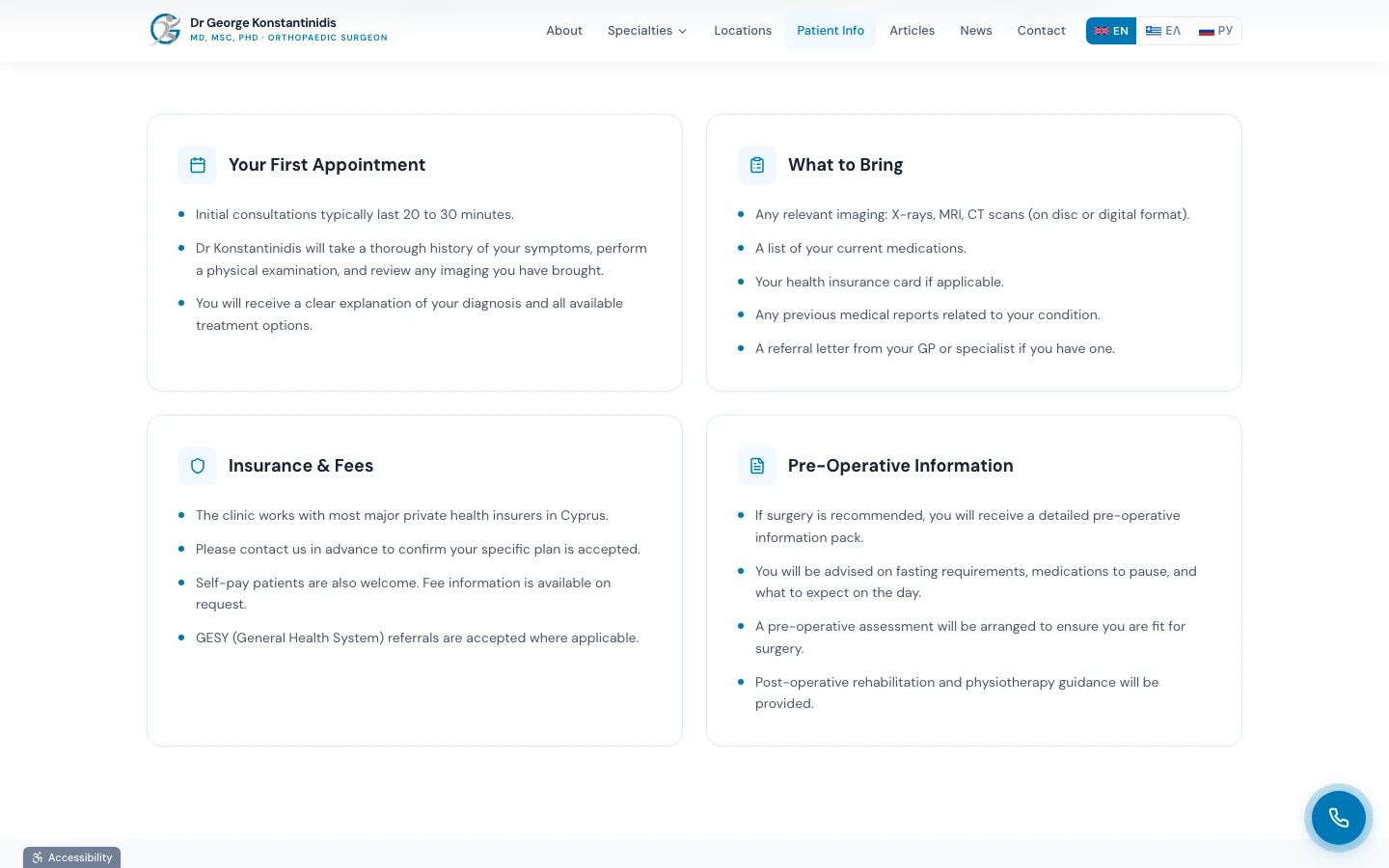
Practical questions can make it harder to take the first step. The patient information section answers questions about referrals, GESY and private insurance, what to bring, consultation length, and how to contact the clinic.
Clear answers help people understand the process before booking. For a medical website, that information also needs to stay accurate and be reviewed by the practice. View the patient information page.
Making locations and contact details easy to find
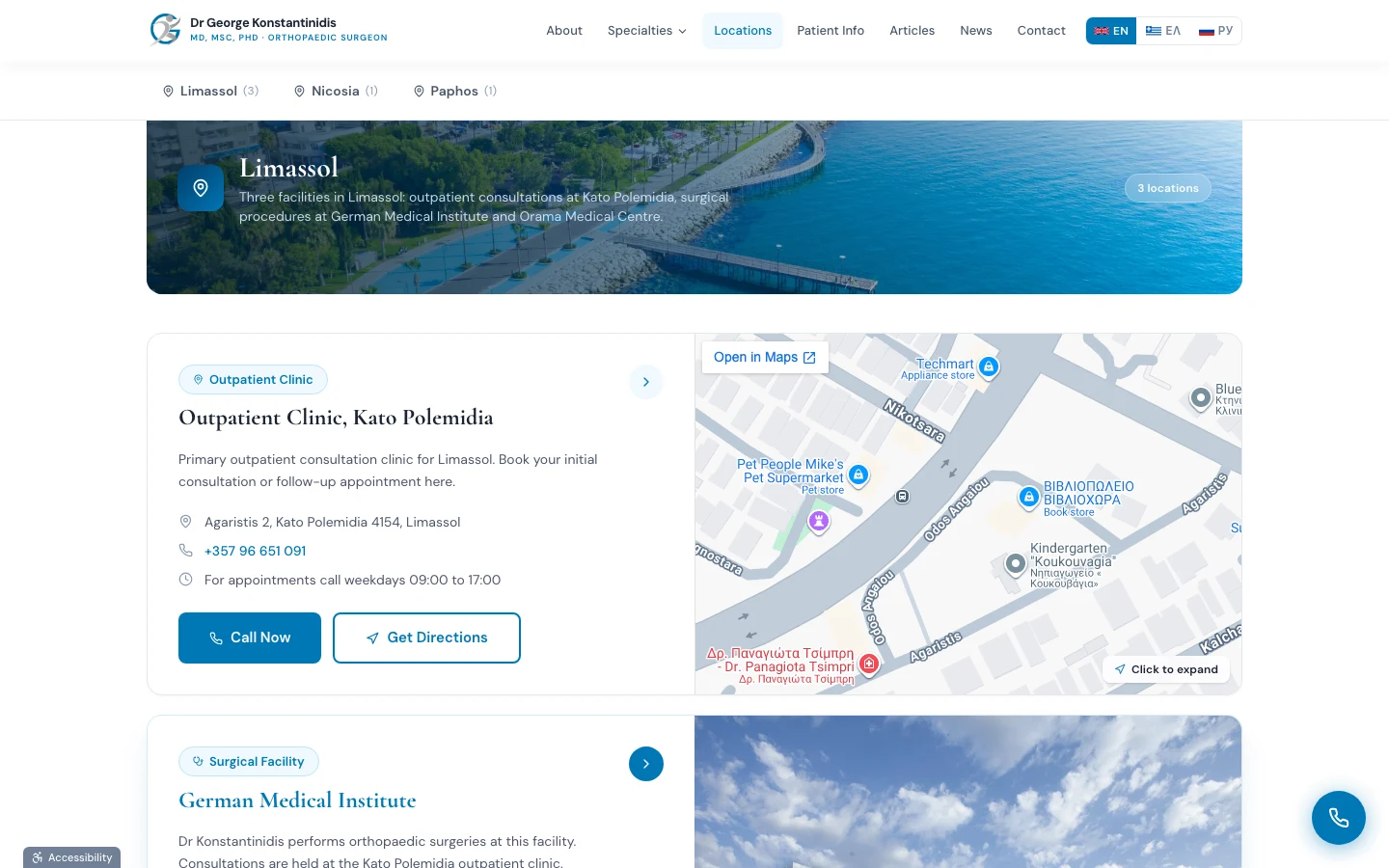
Dr Konstantinidis consults in Limassol, Paphos, and Nicosia, with surgical procedures at Limassol facilities. The website gives locations their own place in the main navigation, alongside clear appointment information.
When a doctor sees patients in several cities, location details should be straightforward to find on both desktop and mobile. Visitors should be able to work out where to go and how to arrange a consultation. Explore the clinic locations.
Giving patients useful information in their preferred language
The website’s English, Greek, and Russian language options help make its main information available to different audiences in Cyprus.
A multilingual medical website needs more than a translated homepage. Important service, location, patient information, and contact pages should also be easy to reach in each language.
Building the website around the patient journey
A specialist’s website has several jobs: explain the doctor’s expertise, organize detailed services, answer practical questions, and make it clear how to get in touch.
For Dr George Konstantinidis, we brought those parts together in one site, with dedicated specialty pages, clinic information, patient guidance, and three language options. The result gives visitors a clearer route from their first question to arranging a consultation.
Screenshots and recording captured in October 2026. This case study looks at the website’s design and organization, not medical advice or measured patient outcomes. For current clinical and appointment information, visit the practice’s website.
Need a website for a medical practice or specialist service?
DM Labs builds custom websites around your expertise, your patients’ questions, and the way your practice works.
Get in touch for a free consultation